You have been doing the same workout for years. 10 to 12 reps. Maybe some light dumbbells. A cardio class here and there. And it used to work. Your body responded. You felt good.
Then something shifted. The results stopped. The weight crept on around your middle. Your energy dropped. Your sleep went sideways. You did more of the same, harder, longer and still nothing changed.
Here is the thing: you have not failed. Your body has changed and your training needs to change with it.
This is one of the most common frustrations we hear from women in their late 30s, 40s and 50s who come through the doors at Legacy Fitness in Barrow-upon-Soar. And the science behind it is clear.
Your Hormones Have Changed. Your Training Has Not.
From your mid-30s onwards, your oestrogen and progesterone levels start to fluctuate and decline. This is perimenopause and it changes how your body responds to exercise.
In your 20s and early 30s, the higher rep ranges work well. 10 to 12 repetitions, training to fatigue, full-body circuits. Your hormones support muscle growth and recovery during that phase.
After 35, those same hormones are no longer doing the heavy lifting (so to speak). The 10 to 12 rep sets that used to give you visible results? They create what exercise scientists call metabolic stress. Your muscles contract, they use fuel, but the signal to build new lean tissue and get stronger is weak.
That is why so many women in their 40s feel like their bodies have stopped responding. They are training the same way, expecting the same results and getting frustrated when nothing happens.
Sound familiar? You are not alone. And you are definitely not broken.
What to Do Instead: Lift Heavier, Lift Less
The answer is a shift toward what strength and conditioning coaches call strength-based training. Fewer reps. Heavier weight. More rest between sets.
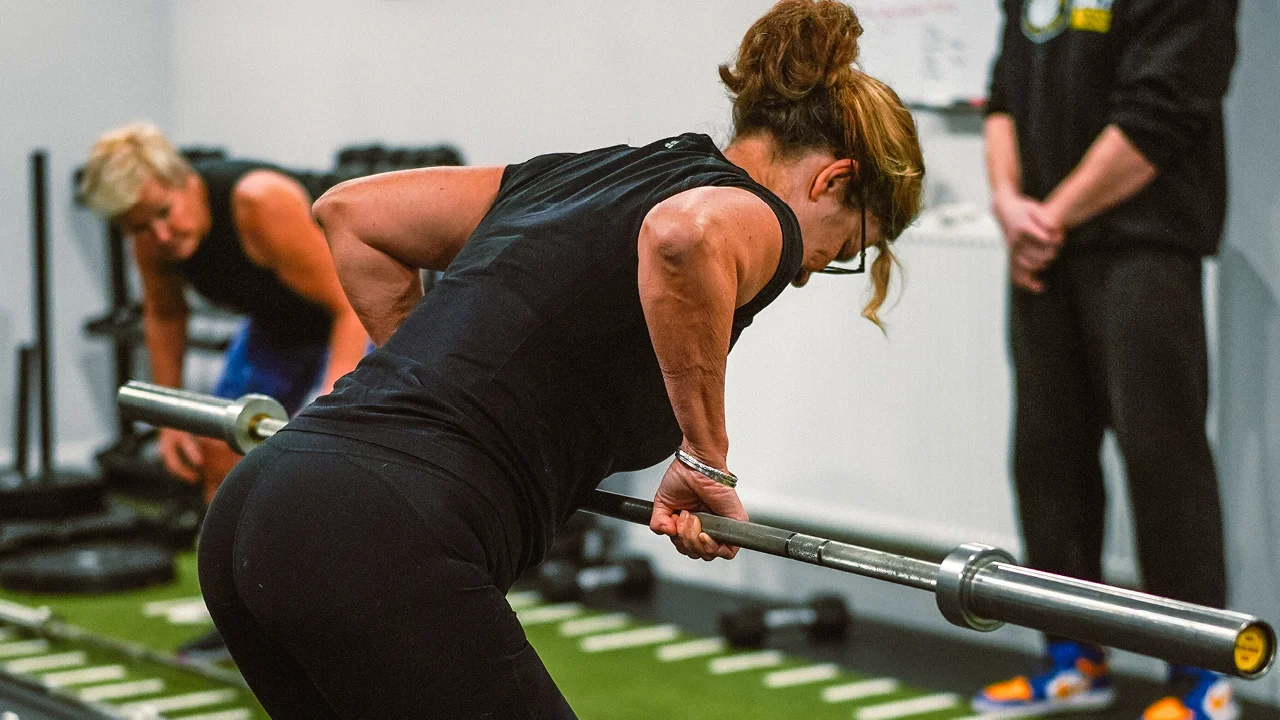
Instead of 10 to 12 repetitions at a moderate weight, you are aiming for 6 to 8 repetitions at a weight that genuinely challenges you. This creates a different kind of stimulus, one that signals your central nervous system to build muscle, increase bone density and boost your metabolism.
This matters for women navigating perimenopause and menopause because strength training at this intensity replaces the external stress signal that your hormones used to provide. Your body still responds to that stimulus. It still builds muscle. It still strengthens bones. You just need to ask it in a different way.
If You Have Never Lifted Before, Start Here
This is where a lot of women get stuck. They hear “lift heavy” and think they need to march into a gym, grab the biggest dumbbells they can find and figure it out.
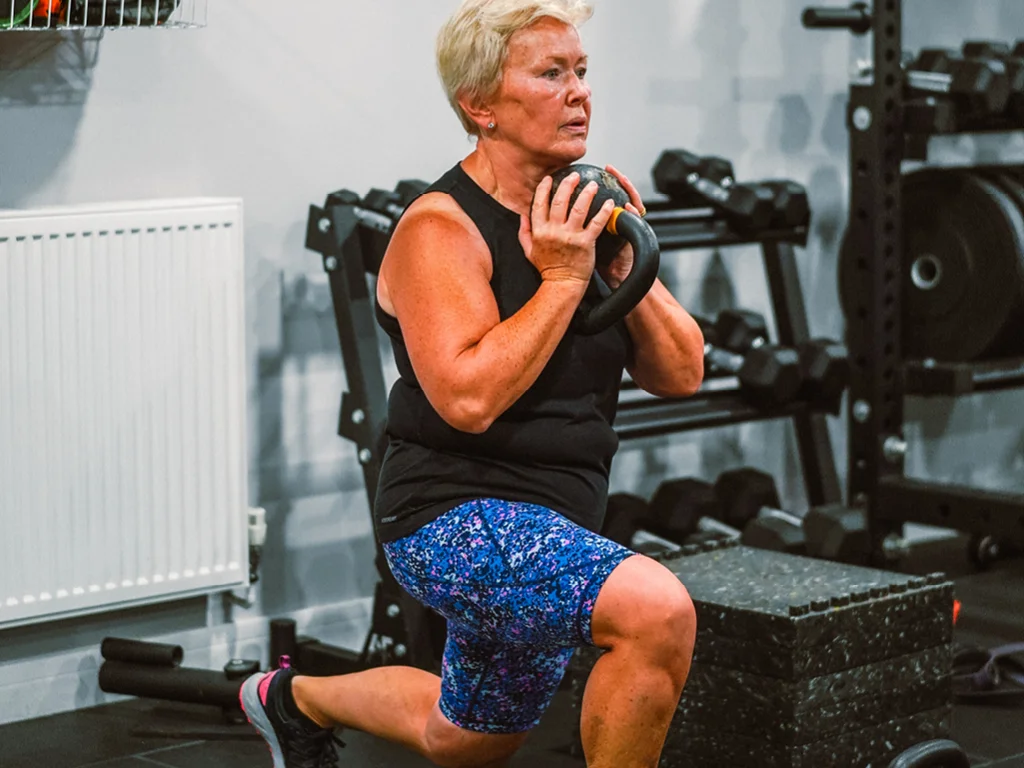
If you have never done any kind of strength training, the first step is learning to move well. That might mean bodyweight exercises for the first few weeks. Squats, lunges, press-ups against a wall, step-ups. It might mean using very light weights to practise the movement patterns before you add any real load.
The goal during this phase is not to get strong (that comes later). The goal is to teach your body how to move through full ranges of motion with good control. Your joints, tendons and ligaments need time to adapt. Women over 40 are more susceptible to soft tissue and joint injuries, and rushing the process is the fastest way to set yourself back.
Over the course of 4 to 6 months, you gradually add load as your body becomes more resilient. Six months from now, you could be lifting weights that feel genuinely heavy and feeling better than you have in years.
Think in Decades, Not Weeks
The real question is not “how do I look by summer?” It is “how do I make sure I am independent and capable at 80?”
Strength training for women over 40 is an investment in your bone density, your muscle mass, your brain health and your ability to live without limitation as you age. Laura Turner, a Legacy member who is 54, came to us with knee pain that made walking down stairs difficult. Now she runs down them.
Jane Eaton, another Legacy member, calls her training “preventative medicine.” She sees it as an investment in her future health. That is exactly right.
This is not a training block. It is a lifestyle. And the sooner you start, the more time your body has to build the strength that will carry you through the next 30, 40 even 50 years.
Why Expert Coaching Matters More After 40
You can find workout programmes online. You can watch videos on form. But when your body is changing hormonally, when your joints and soft tissue need more careful management and when the stakes of getting it wrong are higher, having a qualified coach in the room with you makes a real difference.
At Legacy Fitness in Barrow-upon-Soar (just minutes from Loughborough), every member gets a permanent personal coach. Not a different face every session. Your coach knows your body, your history, your goals and your limitations. They programme your training, monitor your form and progress your load at the right pace.
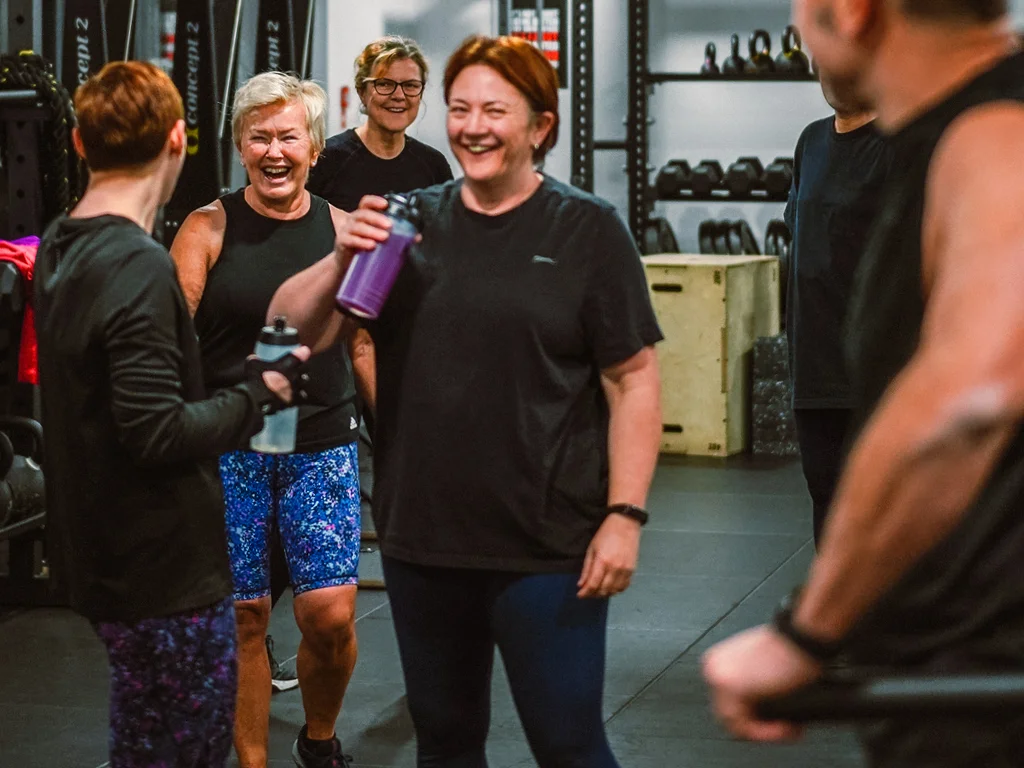
Our Small Group Personal Training sessions run for 45 minutes with 2 to 4 people. You get the individual attention of personal training with the energy and accountability of training alongside others who are on a similar path. Many of our members are women in their 40s, 50s and 60s who came to us for exactly the reasons outlined in this article: their old approach stopped working and they needed a smarter one.
Interested?
We run a 21-Day Trial that gives you a real taste of how we train at Legacy. Coached sessions, a body composition scan and a nutritional evaluation, all included.
If anything in this article hit a nerve, get in touch. Have a chat with us. No sales pitch. Just a conversation about where you are, what you want and whether we are the right fit.